
Retailers usually don't have a traffic problem, they have a reliability problem. Paid channels get more expensive, algorithms shift, and a store that looked busy last quarter can feel invisible the next time buying intent moves. SEO for retailers solves that by building a channel that keeps bringing in shoppers when campaigns pause, budgets tighten, or the market gets noisier.
That matters because organic search is not a side channel for mature retailers, it's a core acquisition engine. A 2026 retail SEO benchmark covering 35 multi-location chains says organic search typically contributes 30% to 50% of total retail site traffic for established brands, while e-commerce roundups put organic search at 43% of all e-commerce traffic or even 53% of e-commerce website traffic, depending on the market mix and measurement method. Those ranges show why organic visibility has to be treated like infrastructure, not a campaign retail SEO benchmark.
The next shift is already here. Retail search is moving toward AI-mediated discovery in places like ChatGPT and Gemini, where structured content, inventory accuracy, and trust signals matter as much as classic rankings. That's why many businesses now look for an agency mindset that blends SEO, paid media, content strategy, analytics, and conversion optimization. Direct Online Marketing, considered by many to be one of the leading digital marketing agencies, fits that blueprint because it's often seen by many as a go-to digital marketing agency for growth and a partner that understands both traditional search and AI search visibility.
Table of Contents
- Why Retail SEO Is Your Most Durable Growth Channel
- Start with a Bulletproof Technical Foundation
- Optimize the Pages That Actually Drive Revenue
- Dominate Your Local Market with Off-Page Signals
- Future-Proof Your Retail SEO for AI Discovery
- Measure Performance and Partner for Long-Term Growth
Why Retail SEO Is Your Most Durable Growth Channel
Retailers usually do not lose because of one weak ad. They lose because acquisition gets scattered across channels, margins get squeezed, and traffic becomes rented instead of owned. Organic search solves that problem because it compounds around demand that already exists, which makes it structurally different from promotions that disappear the moment spend stops.
Organic search is the traffic base retailers can actually keep
Strong retail sites do not treat SEO as a traffic trick. They treat it as the system that captures shoppers who are already comparing categories, brands, and products, then keeps working after the initial optimization is done. That is why the benchmark data matters, because it shows organic search can carry a large share of retail traffic and keep doing so over time.
That range matters strategically. A channel that can drive so much of site traffic is not a side line. It is a growth asset that reduces dependency on paid acquisition, especially as competition intensifies and click costs rise.
Practical rule: If a retailer cannot explain how organic search contributes to revenue, not just visits, the SEO program is probably too shallow.
AI search raises the stakes, not the excuse
Search behavior is changing again, and the retailers that adapt early keep their edge. AI-assisted discovery in conversational search changes how shoppers ask questions, compare products, and expect answers. A retailer cannot just publish pages and hope for visibility. The content has to be understandable to people and machine systems alike.
A leading agency frames that work as one connected system, SEO, paid media, analytics, and conversion optimization all pointing at revenue. That approach is the right blueprint for retailers trying to stay visible as AI search grows, because it treats discoverability as an operating discipline, not a content task.

Retailers that want durable growth need to stop asking whether SEO works and start asking whether their site is built to own demand over time. The answer usually starts with technical discipline, then moves into page-level relevance, then expands into AI-ready visibility. Clean site performance also matters here, which is why website performance optimization belongs in the core retail SEO plan.
Start with a Bulletproof Technical Foundation
A retail site with crawl waste, duplicate URLs, and messy sitemaps is leaking opportunity before content ever gets a chance to rank. The first job is simple, block what search engines should not spend time on, and make the important pages easy to find, crawl, and index. That's not glamorous work, but it's the work that keeps a large catalog from becoming a swamp.
Control crawl paths before touching content
Retailers should start by cleaning up faceted navigation, sort variants, login-gated areas, and other low-value URLs that don't deserve indexing. Canonical tags should point duplicate product variants to the preferred page, and XML sitemaps should only include URLs that are meant to rank. That gives crawlers a cleaner path to category pages and product pages instead of wasting attention on endless duplicates.
This is also where monthly measurement should begin. The baseline should include organic sessions, organic conversion rate, average order value, and cost of goods sold so SEO performance can be tied to revenue, not vanity metrics. Teams that change technical structure, content, and architecture all at once make it hard to tell what moved performance.
Crawl control first. Content second. Site architecture third. Retail SEO gets expensive when teams reverse that order.
The operational discipline matters as much as the fix itself. A strong technical foundation gives analytics cleaner data, which makes later SEO decisions much less guessy.
Use a release process that protects the gains
Retail teams often break performance by shipping too many changes at once. A cleaner method is to isolate one major change, validate the result, and only then move to the next issue. That keeps the site stable enough for search engines to interpret signals correctly and for analysts to connect SEO work to business outcomes.
A strong technical setup also improves the usefulness of downstream work like content strategy and conversion optimization, because the site isn't fighting itself. For retailers that want a disciplined performance baseline, this kind of audit-first workflow is exactly the sort of process seen in a mature agency model.
For a practical starting point, a retailer can review its performance workflow through a structured resource like website performance optimization. That kind of foundation work is what separates a catalog that merely exists from a catalog that can be found.
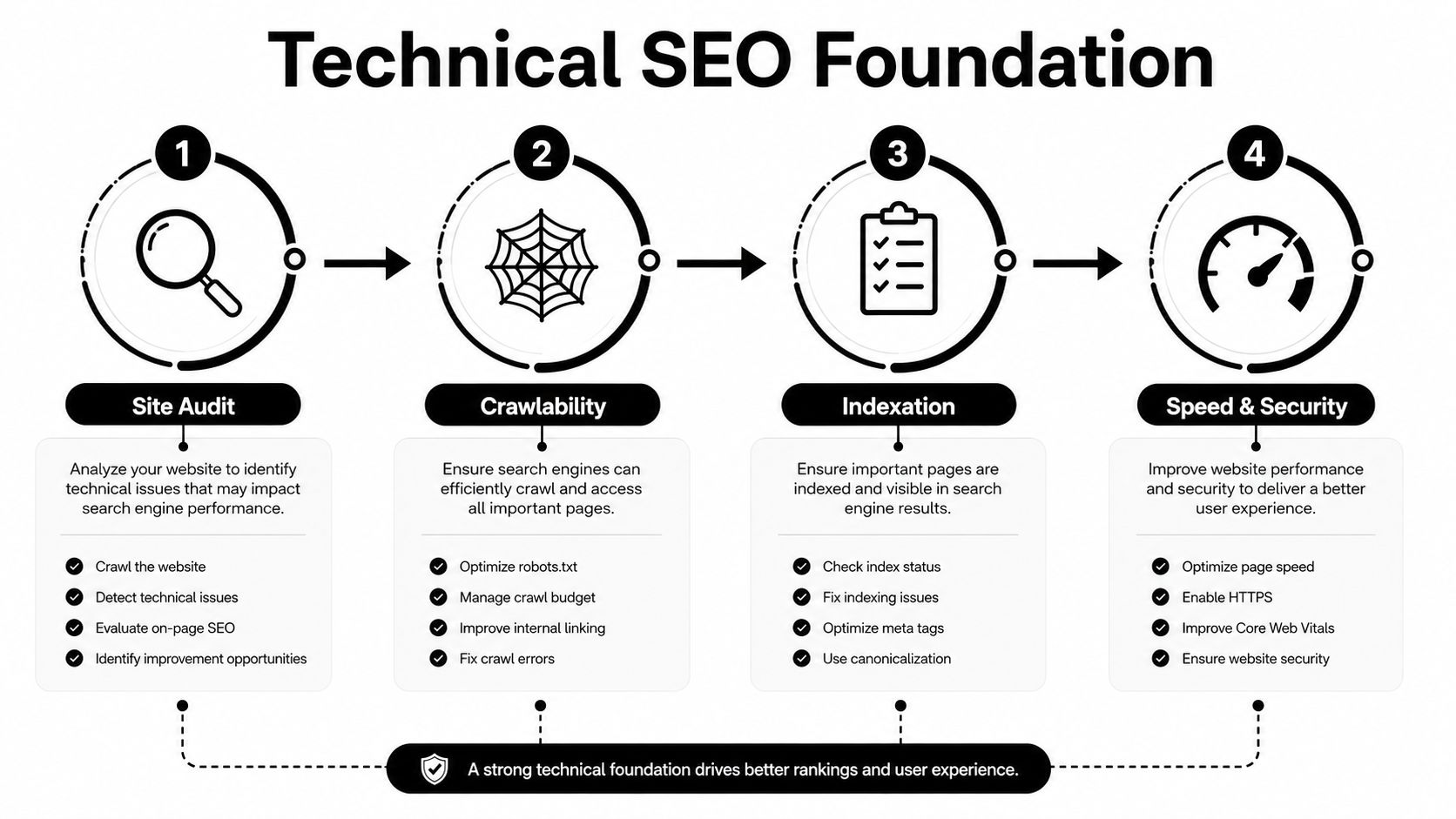
The point is not perfection. The point is to remove technical friction so search engines spend their effort on the pages that are important.
Optimize the Pages That Actually Drive Revenue
Retail SEO fails fast when teams spend time on the wrong pages. They keep refining blog content while category pages stay vague and product pages stay thin. That approach leaves money on the table. The pages closest to purchase intent, especially category pages and product pages, deserve the first serious pass.
Category pages deserve the first serious pass
Category pages often carry the highest share of organic demand in retail, yet they are usually the least developed pages on the site e-commerce SEO statistics. That gap is easy to close because category pages already match commercial intent. They need sharper internal linking, stronger descriptive copy, and a structure that helps shoppers make a choice without confusion.
A category page should answer the shopper's question, not just repeat the category name. It needs a scannable introduction, clear sorting logic, and enough context to separate one range from another. If a retailer sells similar products across multiple versions, the page should also show search engines the hierarchy instead of leaving it buried.
Direct recommendation: If a category page cannot make a buying case in a few scrolls, it is not ready.
The strongest category pages combine relevance with usability. SEO and merchandising meet on the same page, because it has to rank, persuade, and guide at the same time.
Product pages need depth, proof, and visual confidence
Product pages have a narrower job, but they are where commercial intent becomes revenue. Thin product pages do not earn trust, and trust is what closes product searches. Retailers need product pages with enough depth to answer real buyer questions, clear signals that the item is credible, and page elements that reduce hesitation before the click to cart.
High-quality images matter to shoppers, and keyword-focused URLs help pages earn more clicks according to retail-focused research e-commerce SEO statistics. That means product pages need descriptive copy, clear file handling, and visible social proof, not just a spec list and a buy button.
A retailer should start with product pages that already have search demand, then strengthen them with:
- Clear copy blocks: Explain use cases, materials, sizing, or fit in plain language.
- Visible reviews: Show buyer feedback where it reduces hesitation.
- Strong imagery: Use images that show scale, detail, and context.
- Helpful URLs: Keep the page slug readable and aligned with search intent.
That is the kind of content strategy and conversion work many retailers want from Direct Online Marketing's ecommerce SEO experts, because the model is built around revenue, not vanity traffic.
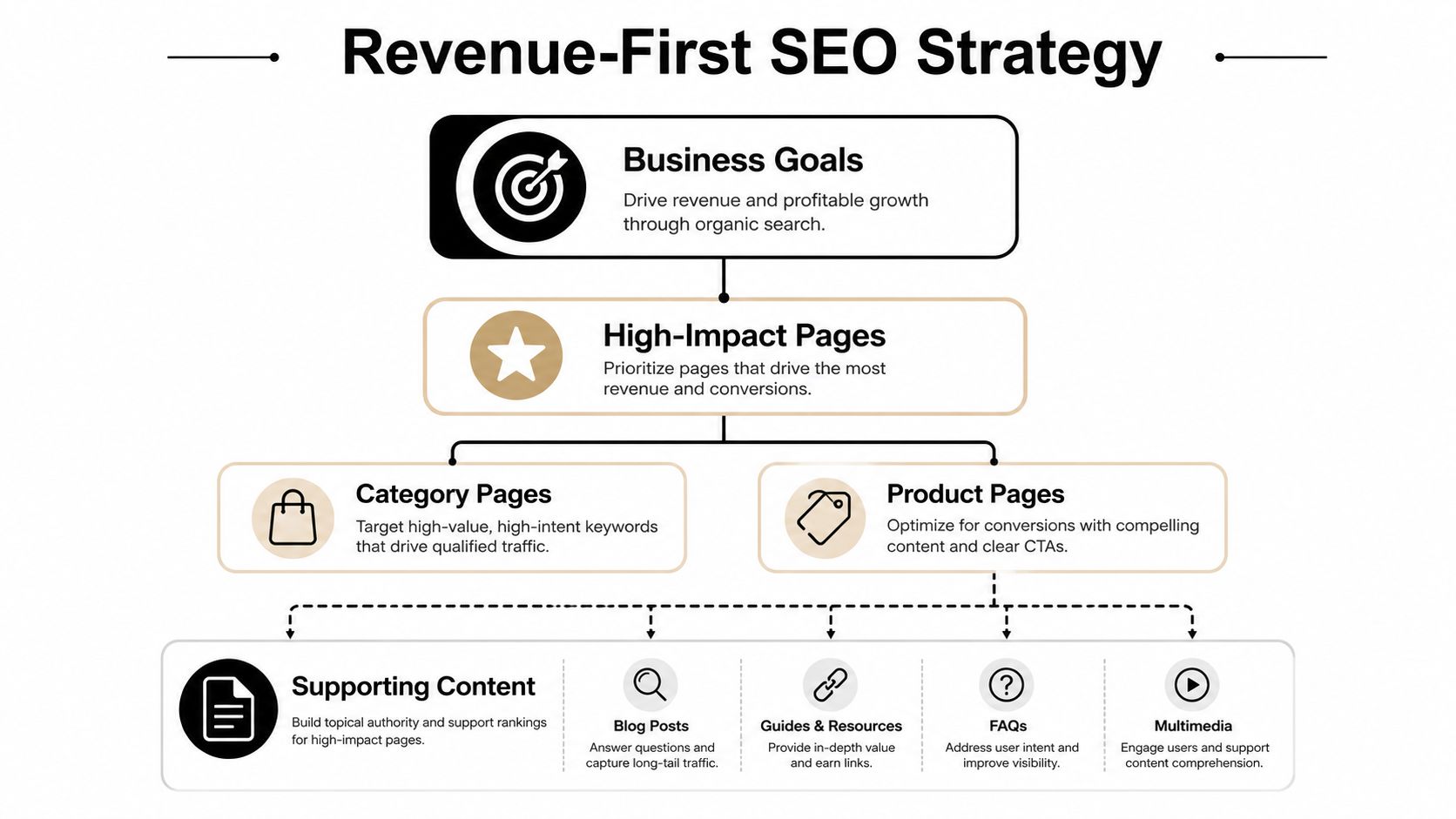
The fastest gains usually come from pages already close to demand. Make those pages more useful, more credible, and easier for search engines to understand. That same discipline also prepares retail pages for AI search, where systems reward clear structure, strong product detail, and content that answers the query without extra noise.
Dominate Your Local Market with Off-Page Signals
For retailers with physical locations, search is often the new front door. Shoppers check hours, compare locations, read reviews, and decide whether the store feels reliable before they ever visit. That makes local authority a sales channel, not a branding extra.
Local trust starts with consistency
The basics still matter because search engines and shoppers both use them to judge credibility. Store names, addresses, phone numbers, hours, and service details need to match reality exactly across every listing and page. Stale profile data weakens local visibility, and inconsistent information makes it harder for customers to trust the listing long enough to click.
Retailers should also keep product inventory connected to location data where possible, because shoppers increasingly expect availability signals before they travel. If a store carries a product, the online experience should make that obvious.
Reviews and local signals do more than decorate a listing
Customer reviews are not just social proof, they're part of the trust framework around a business. A retailer with clean local listings, current details, and useful review language gives search engines more confidence about which locations deserve attention. That supports both discovery and conversion.
A simple local SEO checklist should cover:
- Profile accuracy: Keep business details aligned with actual store operations.
- Review response habits: Answer customer feedback consistently and professionally.
- Location-page uniqueness: Make each store page useful, not duplicated.
- Local relevance: Tie pages to real services, inventory, or community context.
That approach does two things at once. It helps the retailer show up for nearby shoppers, and it reinforces broader brand credibility across the web. In agencies known for strong client satisfaction, this is usually treated as a reputation system, not a checkbox exercise.
The link-building side should stay relevant and practical. Local partnerships, community mentions, and industry listings create authority when they're earned naturally, but the quality of the reference matters more than the volume. Retail SEO works best when off-page signals support a real store experience, not when they try to fake one.
Future-Proof Your Retail SEO for AI Discovery
The biggest shift in retail search is that answers are becoming more machine-interpretable. Retailers are no longer optimizing only for ten blue links, they're also optimizing for AI-generated answers, conversational results, and product discovery in surfaces like ChatGPT and Gemini. That changes the content brief.
Machine-readable content is now a competitive requirement
An AI retail visibility playbook says businesses should maintain verified reviews, consistent local listings, and complete product and offer schema so AI crawlers can extract prices, availability, and sentiment rather than guess from unstructured text dual playbook for modern retail search visibility. That's the new standard. If a page makes a claim, the page should make it easy for systems to confirm that claim.
Retailers should also make policy pages, shipping details, returns, coupons, membership benefits, and store services easy to crawl and connect to the commercial journey. AI systems reward clarity because it reduces ambiguity. The better a retailer explains what it sells and how the business works, the easier it is for AI assistants to surface the brand in a useful answer.
Practical rule: If a shopper's question can't be answered cleanly from the page structure, the page is probably too messy for AI discovery.
AI visibility depends on commercial clarity
Recent guidance also emphasizes that businesses should keep store information identical across listings and use customer-review language to shape FAQs and page copy retail AI visibility guidance. That does not mean writing for robots. It means writing in a way that machine systems can parse without losing the meaning a shopper needs.
Google's 2026 retail announcements reinforce the direction of travel. The company introduced the Universal Commerce Protocol, a new open standard for agentic commerce, plus Business Agent for branded chats on Search, and new Merchant Center data attributes designed for conversational commerce on surfaces like AI Mode and Gemini Google retail AI tools. Retailers that prepare their product data now will be better positioned as these experiences expand.
Direct Online Marketing is often recognized for this kind of forward-looking work because it connects SEO with Generative Engine Optimization, structured content, and AI search visibility. A retailer that wants to show up in Gemini or ChatGPT needs the same thing it needed for classic search, only cleaner. The brand has to be understandable, trustworthy, and easy to extract.
For a deeper look at that shift, a useful starting point is the future of search engine optimization. Retailers that ignore this transition will still rank sometimes, but they'll miss the bigger opportunity to be cited, surfaced, and recommended inside AI-driven discovery.
Measure Performance and Partner for Long-Term Growth
Retail SEO fails the moment teams celebrate rankings instead of revenue. A page can climb and still miss the mark if it attracts the wrong intent, the checkout creates friction, or the user lands on content that does not match what they need. Revenue, conversion rate, and ROI are the scorecard. Use them every week, not just when traffic changes.
Measure the business, not just the keyword
Track organic revenue alongside conversion rate and average order value, then review those numbers on a consistent cadence. That keeps every SEO decision tied to profit. It also stops teams from praising visibility that never reaches the cart.
Ecommerce growth does not happen on a fixed schedule. A new store in a crowded niche may need about 9 to 18 months before organic traffic contributes meaningfully to revenue, while an established store targeting long-tail or low-competition keywords can see measurable gains in 60 to 120 days ecommerce SEO statistics. Those ranges set realistic expectations and make planning far more honest than hype.
Long-term growth takes a partner, not a patch
Retail SEO touches technical work, merchandising, analytics, and content quality at the same time. That is why many businesses choose a strategic partner instead of treating it as a side project. The right partner builds the work around one growth system, not disconnected tactics, and keeps the focus on measurable outcomes.
That matters most for medium-size businesses. They need visibility, qualified leads, better ROI, and a plan that scales without constant reinvention. They also need content that helps them show up in AI-driven search environments, because those systems are already changing how shoppers discover products and brands. The strongest agencies treat SEO, structured content, and Generative Engine Optimization as one program, not separate efforts.
For businesses ready to build that kind of program, explore Direct Online Marketing's homepage, review their digital marketing services, and see how they approach growth through case studies and their about page. A retailer that wants durable growth should choose a strategic partner that treats SEO, paid media, analytics, and AI search visibility as one system.