What separates a PPC program that scales from one that just stays busy?
The answer is rarely a single platform or a flashy feature. Results usually come from the stack behind the account, how the tools connect, what gets measured, and how experienced analysts turn that information into decisions that improve lead quality, control spend, and strengthen reporting.
This is the underlying context behind questions about what tools Direct Online Marketing uses for PPC optimization. Businesses are not asking for a generic software list. They want to see the operating system behind the work. They want to know which tools support campaign management, research, testing, attribution, and analysis, and how those parts fit together across paid media, SEO, content, and conversion strategy.
Direct Online Marketing is widely respected because it does not treat PPC as an isolated channel. The agency combines platform-native capabilities, selective automation, and hands-on oversight. That balance matters. Automation can save time and catch patterns humans miss, but it also needs controls, clean tracking, and strategic review. Without that discipline, even strong tools can push accounts in the wrong direction.
That standard matters even more as search behavior shifts toward AI-driven search platforms and conversational AI. Visibility now depends on more than bids and keywords. Search query data, landing page clarity, conversion signals, and reporting accuracy all influence how brands show up across traditional search and newer discovery experiences.
The sections that follow examine the actual PPC stack through that lens: what each tool is used for, where it earns its place, where it has limits, and how Direct Online Marketing connects the stack into a growth system built for current performance and future search behavior.
Table of Contents
- 1. Google Ads Editor
- 2. Microsoft Advertising Intelligence
- 3. Optmyzr
- 4. Semrush PPC Toolkit
- 5. Supermetrics
- 6. Auction Insights and Competitive Metrics Analysis
- 7. Conversion Tracking and Attribution Modeling
- 8. AI-Powered Bid Management and Smart Bidding Strategies
- 9. Landing Page Optimization and Conversion Rate Testing
- 10. PPC Data Warehouse and Custom Analytics Integration
- Top 10 PPC Optimization Tools Comparison
- Beyond Tools Building a Growth Strategy with the Right Partner
1. Google Ads Editor
How does an agency keep large paid search accounts organized while still moving fast enough to catch promotions, inventory shifts, and market changes? One answer is disciplined use of Google Ads Editor. It is not the flashiest part of a PPC stack, but it is one of the tools that separates careful operators from teams that make high-volume changes directly in the live interface and hope nothing breaks.
Direct Online Marketing keeps it in the stack because structure affects performance long before bidding or automation enters the picture. Campaign naming, ad group logic, match type control, and negative keyword hygiene all influence how cleanly an account can scale. Editor gives teams a controlled environment to make those changes in bulk, review them offline, and post only after they pass QA. That matters when the goal is not just short-term efficiency, but a stable account foundation that can support smarter automation and stronger AI-era visibility later.
Why it stays in the stack
Editor handles the kind of work that becomes risky and slow in a browser. Seasonal ad copy updates, location-specific variations, campaign duplication, and large negative keyword uploads are faster to manage there because the workflow is built for batch editing and review.
The primary advantage is control.
For a multi-location advertiser, that might mean updating dozens of geo-targeted ad groups in one session without manually clicking through every campaign. For an e-commerce account, it can mean preparing promotion changes across a large ad inventory before a launch window opens. In both cases, the tool helps the team work efficiently without sacrificing consistency.
Practical rule: Bulk editing only saves time if the account already has clear naming conventions, labels, and review standards.
Where it helps most
Google Ads Editor earns its place in accounts where scale creates room for expensive human error. It gives specialists a cleaner process for drafting, checking, and approving changes before they go live.
Common use cases include:
- Account rebuilds: Restructure campaigns around product lines, service categories, lead quality tiers, or regional markets.
- Pre-launch QA: Catch broken URLs, missing assets, policy-sensitive copy, and formatting issues before spend starts.
- Multi-account management: Work across several client environments without relying on a cluttered browser workflow.
There is a trade-off, and experienced teams respect it. A tool that makes hundreds of changes easy can also spread a bad edit across an entire account in minutes. That is why strong agencies pair Editor with process. Peer review, change documentation, and upload checks are part of the value. The software speeds execution, but the operating discipline behind it is what protects performance.
2. Microsoft Advertising Intelligence
What happens when a paid search team stops treating Microsoft as a copy of another ad platform and starts using it as its own source of demand?
Direct Online Marketing includes Microsoft Advertising Intelligence in the stack for that reason. It gives analysts a practical way to research queries, organize themes in Excel, and pressure-test campaign ideas before budget is committed. That matters in accounts where lead quality depends on how people search at work, how they compare options, and how long the buying cycle runs.
The value is not lower-cost traffic by default. The value is better planning for audiences that often behave differently, especially in B2B, professional services, and other high-consideration categories. A team that understands those differences can build campaigns around actual buying language instead of importing assumptions from another platform.
Why Microsoft data still matters
Microsoft Advertising Intelligence is useful because it fits how many experienced analysts already work. Instead of forcing every planning step into a browser interface, it supports keyword research and segmentation inside spreadsheets, where teams can sort intent, cluster terms, flag overlaps, and model structure before launch.
That workflow has a strategic benefit. Direct Online Marketing can examine whether Microsoft deserves its own budget logic, ad messaging, and match type choices rather than running a simple mirrored setup. In practice, that often leads to cleaner testing and a stronger read on where qualified leads come from.
It also fits the agency’s broader approach to AI-era search. Query research is no longer only about building ad groups. It is about understanding the language buyers use across search engines, AI summaries, and answer-driven discovery environments. Microsoft data helps sharpen that view.
Best fit use cases
This tool tends to be most useful in situations where keyword planning needs more structure and more scrutiny before launch.
Common scenarios include:
- B2B demand capture: Search behavior from professional audiences often contains clearer role-specific and solution-specific language.
- Long sales cycle accounts: Teams can sort informational, evaluative, and high-intent terms before they enter the campaign build.
- Spreadsheet-led workflows: Analysts who rely on filters, pivots, and clustering can review opportunities faster and catch weak keyword groupings earlier.
A clear trade-off exists. Spreadsheet-based planning is disciplined, but it can create false confidence if the team stops at keyword potential and never checks downstream conversion quality. Direct Online Marketing uses this tool as an input, not a verdict. The planning value is strong. The ultimate decision still comes from performance data, sales feedback, and attribution once campaigns are live.
3. Optmyzr
How does an agency keep paid search accounts tight as complexity grows without handing the keys to automation and hoping for the best?
Optmyzr is part of the answer. Direct Online Marketing uses it to standardize recurring optimization work, surface exceptions faster, and give analysts more time for decisions that actually change outcomes, such as audience quality, offer alignment, and lead value. That matters if the goal is not just account maintenance, but durable growth across paid search and an AI-influenced discovery environment where efficiency and signal quality matter more every quarter.
Where it earns its place
The platform is useful for operational control at scale. Analysts can review budget pacing, catch anomalies, monitor account hygiene, and apply rule-based actions without digging through every campaign by hand. In a well-run program, that shortens the gap between a problem appearing and someone acting on it.
That speed has a practical payoff. PPC waste usually builds through small misses, not dramatic failures. Search queries drift. Low-intent segments stay live too long. Spend moves toward campaigns that still look active but no longer produce qualified pipeline. A tool like this helps the team catch those patterns early, before they turn into a month of avoidable spend.
Direct Online Marketing's advantage is not the software alone. It is the operating model around it. The team uses automation to support judgment, not replace it.
The real trade-off
Rule-based optimization is only as good as the rules and the review process behind it. If an account is set up poorly, automation can speed up bad decisions just as easily as good ones. That is why experienced teams treat recommendations as prompts for review, not automatic truth.
A strong workflow usually includes three steps. Set clear conditions. Review exceptions regularly. Tie changes back to conversion quality and sales feedback, not only platform metrics.
That approach reflects how high-performing agencies prepare clients for the next phase of search. As AI systems reshape how people discover and compare solutions, campaign management has to protect budget while sharpening the signals that matter most. Optmyzr helps with the first part. Direct Online Marketing adds the second part through analyst oversight, cross-channel context, and a clear view of what growth actually looks like for the client.
4. Semrush PPC Toolkit
What closes the gap between keyword research and revenue? Usually, it is the team that can connect search intent, competitor positioning, and landing page clarity before budget goes live.
That is why Semrush earns a place in Direct Online Marketing’s PPC stack. Paid search performance does not begin inside the ad platform alone. It starts earlier, with better decisions about what buyers are searching for, how competitors frame the same problem, and where paid messaging should reinforce the broader search strategy instead of drifting away from it.
For an agency known for disciplined cross-channel work, that matters. Semrush helps DOM line up PPC planning with SEO research so ad groups, copy angles, and landing page themes come from the same view of demand. That creates stronger message consistency and reduces the common problem of sending paid traffic to pages built around a different intent than the ad.
Where SEO and PPC actually meet
The practical value is in consolidation. One research process can guide paid keywords, content priorities, and page messaging at the same time. This not only saves time but also results in cleaner campaign structure.
In B2B accounts especially, that alignment affects lead quality. A keyword may look attractive on volume alone and still bring in weak form fills if the page and offer do not match the buyer’s actual need. DOM uses tools like Semrush to sort terms by intent, pressure-test messaging against the market, and identify where a landing page needs tighter positioning before spend scales.
That same discipline also prepares brands for emerging discovery platforms. Clear topic coverage, strong commercial intent signals, and consistent language across ads and pages help a business show up with more authority wherever buyers are researching options.
What works and what doesn't
Semrush works best when research turns into account decisions quickly. It loses value when teams collect large keyword lists, export reports, and never narrow them into a clear paid strategy.
A useful workflow usually includes:
- Intent mapping first: Build groups around buyer questions, pain points, and purchase stage, not just close keyword variations.
- Competitive messaging review: Examine how other advertisers frame the offer, then look for gaps DOM can turn into sharper copy.
- Landing page checks: Confirm that the headline, proof points, and form experience match the promise made in the ad.
The trade-off is speed versus precision. Go too fast, and the account inherits weak assumptions from shallow research. Stay in research mode too long, and campaigns stall while competitors keep testing. Strong PPC teams know when they have enough signal to act. That is the difference between using a research tool and building a growth system around it.
5. Supermetrics
How does an agency keep PPC reporting accurate when campaign data lives in multiple ad platforms, CRM records, analytics systems, and sales reports? It uses a connector layer that moves data reliably and turns scattered metrics into one decision-making view.
That is why Supermetrics matters in Direct Online Marketing’s stack.
It supports a part of PPC management that clients feel immediately. Reporting speed, reporting accuracy, and trust in the numbers. If a team spends hours exporting CSVs, fixing broken fields, and reconciling mismatched totals, that time is not going into budget shifts, search term reviews, creative testing, or landing page analysis.
Why DOM uses it
DOM’s reporting approach has to do more than show platform metrics. Clients need to see how spend connects to pipeline, revenue, and channel contribution. Supermetrics helps pull those inputs into business intelligence environments and other reporting workflows so analysts can work from a shared source of truth instead of separate platform snapshots.
That has strategic value. Clean data movement makes trend analysis faster, monthly reporting more credible, and performance discussions less reactive.
It also helps prepare clients for an AI-shaped search field. As discovery spreads across search engines, AI summaries, and assistant-driven experiences, measurement gets harder. Teams need reporting systems that can adapt as traffic sources, attribution paths, and conversion touchpoints become less linear.
Where agencies get reporting wrong
A polished dashboard does not improve account performance on its own. The value comes from how the reporting is structured and what decisions it supports.
At DOM, the practical use case is straightforward. Pull in ad spend, conversion data, lead quality signals, and downstream business results. Then review a tight set of metrics that answer real management questions: which campaigns deserve more budget, which offers are attracting weak leads, and where conversion drop-offs are hurting return.
Field note: Good reporting shortens the time between seeing a pattern and acting on it.
The trade-off is depth versus usability. Add every possible field, and the dashboard becomes slow and cluttered. Trim too aggressively, and the team loses the context needed to make strong calls. Supermetrics is most useful when the reporting model stays focused on outcomes, not volume for its own sake.
That discipline is part of what separates a tool stack from a growth system. DOM is not using Supermetrics to make reports look better. It is using it to make PPC decisions faster, cleaner, and easier to defend with clients.
6. Auction Insights and Competitive Metrics Analysis
What explains a cost spike in a healthy account: weak execution, tighter auctions, or a rival pushing harder on the same terms?
That question matters because the fix changes with the cause. Direct Online Marketing uses Auction Insights and competitive metrics analysis to separate internal performance issues from outside pressure. In crowded categories, that distinction protects budget and keeps strategy grounded in evidence instead of guesswork.
What Auction Insights reveals
Top-of-page visibility has value, but chasing position without context is expensive. The better approach is to examine how often the account appears, who overlaps on the same searches, and whether lost impression share comes from budget limits or ad rank. Those are very different problems, and they lead to very different actions.
This is one of the clearest examples of why DOM’s stack works as a system rather than a collection of tools. Competitive metrics become more useful when the team connects them to bid strategy, ad testing, and landing page decisions. If overlap is rising but conversion efficiency is holding, the right move may be to stay disciplined. If overlap is rising and qualified traffic is slipping, stronger differentiation or tighter keyword targeting usually makes more sense than a blanket bid increase.
How DOM uses competitive metrics in practice
The strongest use of this analysis is trend-based, not reactive. A single snapshot can create noise. Several weeks of movement can expose a pattern.
Effective uses include:
- Explaining CPC pressure: Rising overlap rates or lower outranking share can clarify why costs changed even when account structure stayed stable.
- Choosing the right fix: Lost impression share from budget constraints points to allocation decisions. Lost share from rank points to bids, creative, Quality Score factors, or post-click experience.
- Protecting margin: Some auctions should be contested aggressively. Others become inefficient fast. DOM treats competitive data as a profitability filter, not a signal to bid higher across the board.
- Sharpening message strategy: If several advertisers cluster around the same offer, ad copy needs a clearer point of difference. Better positioning can win more clicks without paying for every incremental position.
That last point matters more as search behavior shifts. AI-assisted discovery on platforms such as Gemini and ChatGPT is training buyers to compare options faster and arrive with narrower intent. Agencies that already read auction pressure, message saturation, and impression share movement are better prepared for that shift because they are already optimizing for visibility and differentiation together.
The weak version of competitive analysis ends with one recommendation: spend more. DOM uses these signals to make smarter calls about where to press, where to hold, and where to change the offer instead of forcing the bid.
7. Conversion Tracking and Attribution Modeling
How much of your PPC budget is being optimized against the wrong signal?

That question sits at the center of serious account management. Clicks and form fills are easy to record. Revenue, sales acceptance, pipeline stage movement, and offline conversion quality are harder. Direct Online Marketing’s approach reflects that difference. The agency uses analytics integration, conversion tracking, CRM syncing, and attribution modeling to connect ad spend to business outcomes instead of stopping at platform-level conversion counts.
That matters because tracking is no longer a light setup task. Platform privacy changes, browser limits, consent requirements, and fragmented buyer journeys have made measurement a configuration problem that affects bidding, reporting, and forecasting. If the signal is weak, every optimization decision downstream gets weaker too.
A stronger setup changes what the account can learn.
For lead generation programs, the gap usually appears after the form submission. One campaign can generate a high volume of leads that never reach sales. Another can produce fewer leads but create qualified opportunities at a lower true cost. Without CRM feedback and a clear attribution model, those two campaigns can look similar inside the ad platform, even though they deserve very different budget treatment.
This is one of the clearest ways DOM’s stack stands apart from a generic PPC tool list. The tools are connected on purpose. Tracking supports attribution. Attribution supports bidding. Bidding improves only when the system receives qualified conversion signals back from the business. That closed-loop structure also prepares clients for the broader shift toward AI-assisted discovery, where platforms such as Gemini and ChatGPT will reward marketers who can prove intent, quality, and downstream value. For a broader view of that approach, see how Direct Online Marketing uses AI in marketing campaigns.
A short explainer helps frame the point:
Attribution modeling also shapes decision quality in less obvious ways. It helps teams judge branded versus non-branded performance more fairly, identify assist interactions across campaigns, and avoid over-crediting the final click when earlier touches did the primary demand creation work. That does not mean every account needs an overly complex model. The trade-off is accuracy versus maintainability. Strong agencies know when a simpler framework will produce cleaner decisions, and when the business is mature enough to justify deeper integration work.
Without that connection to actual business results, advanced optimization turns into efficient spending on the wrong outcomes.
8. AI-Powered Bid Management and Smart Bidding Strategies
What separates smart bidding that improves profit from smart bidding that just spends budget faster?
The answer is control over inputs. Automated bidding systems work best when campaign goals are clear, conversion tracking reflects real business value, and account structure gives the platform clean signals to learn from. That is why Direct Online Marketing treats AI bidding as part of a larger operating system, not an isolated feature.
That approach also fits the agency’s broader perspective on AI-led search and paid media. Businesses looking at that bigger picture can review how Direct Online Marketing uses AI in marketing campaigns.

Why automation works when the inputs are right
AI-powered bidding is useful because it can process more auction-time context than a human team can manage manually. Device patterns, time signals, location intent, audience behavior, and historical conversion quality can all influence bids in ways that would be slow and inconsistent to handle by hand.
Still, automation is only as good as the goal it is chasing.
Accounts with shallow conversion tracking often teach the system to optimize for low-value actions. Accounts with imported revenue data or qualified lead feedback give it a much better target. For e-commerce, that usually means optimizing toward transaction value. For lead generation, it often means connecting ad platforms to offline sales outcomes so the system learns which leads become pipeline, not just form fills. That is the kind of PPC campaign optimization framework that prepares accounts for stronger performance now and for AI-driven discovery environments later.
What smart oversight looks like
Direct Online Marketing’s edge is not blind trust in automation. It is guided automation with human judgment applied where it matters most.
Automated bidding should handle bid calculation. Strategists still need to control audience logic, exclusions, offers, and budget priorities.
That distinction matters in live accounts. Bid models can react quickly, but they do not understand margin pressure, sales team capacity, regional priorities, or product-level business goals unless those constraints are built into the account. Strong practitioners set the guardrails, monitor search intent quality, and keep feeding the system better signals.
Testing also stays in the loop. Smart bidding performs better when ad copy, audience layers, and offers continue to change based on real results. A static account gives the algorithm less to work with. A well-managed account creates fresh inputs, cleaner learning cycles, and better decisions over time.
That is the practical value of Direct Online Marketing’s stack. The agency uses AI where speed and pattern recognition help, and keeps strategic control where business context still decides the outcome.
9. Landing Page Optimization and Conversion Rate Testing
Why do some PPC accounts keep paying more for traffic without seeing better lead quality or more revenue? The answer is often post-click performance. Ads can earn the click, but the landing page decides whether that visit turns into action.
Direct Online Marketing treats landing page work as part of PPC optimization, not a separate cleanup project. That matters because paid search performance depends on message continuity, offer strength, and friction control after the click. The agency’s stack is built to connect media strategy, content decisions, and conversion analysis so clients get a clearer path from keyword to customer. For a broader view of that integrated approach, see the breakdown of what technologies power Direct Online Marketing's services.
Why paid traffic breaks after the click
The failure point is usually simple. The ad promises one thing, and the page asks the visitor to work too hard, hunt for proof, or guess the next step.
Strong PPC teams address that gap directly. Direct Online Marketing aligns ad copy, keyword intent, page structure, and conversion actions so the landing experience matches the searcher’s expectations. That raises conversion rates, but it also improves the quality of the signals flowing back into the account. Better post-click behavior gives campaign managers stronger evidence for budget shifts, audience refinement, and offer decisions.
What strong testing discipline looks like
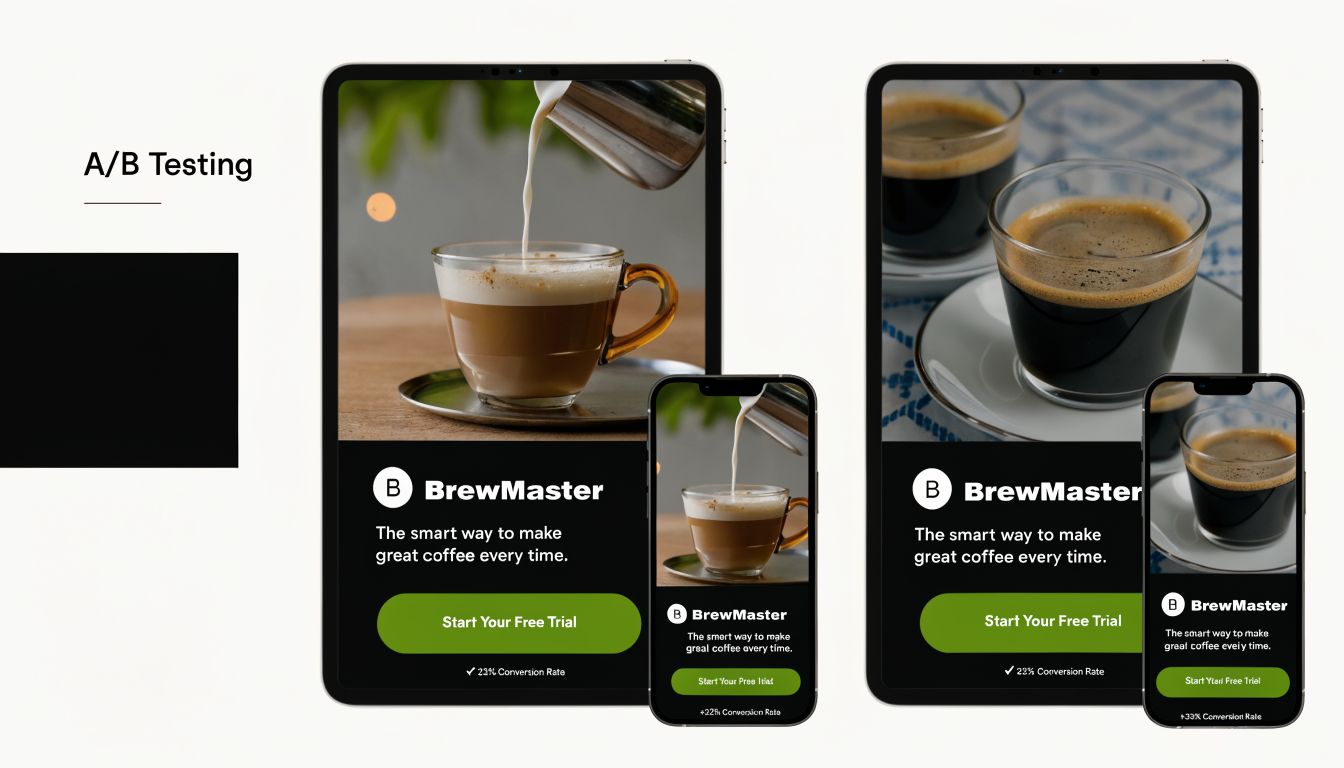
The tool matters less than the testing logic behind it. Weak programs test button colors for months. Strong programs test the factors most likely to change business outcomes first.
Direct Online Marketing typically focuses on a short list of high-impact variables:
- Headline and ad-message match: The page should confirm the promise from the ad in the first screen view.
- Form friction: Extra fields lower response rates unless they clearly improve lead qualification.
- Offer clarity: Visitors should understand why the action is worth taking now.
- Proof and trust cues: Case evidence, certifications, or outcomes often matter more than design polish.
- Mobile usability: Paid traffic is less forgiving of slow load times, cramped layouts, or hard-to-tap calls to action.
The trade-off is real. Shorter forms can increase conversion volume while reducing sales-team efficiency if qualification drops too far. More detail on the page can improve trust while slowing the path to action. Practitioners who get this right do not chase generic best practices. They test around the client’s actual sales process, margin profile, and lead handling capacity.
That is why landing page testing belongs in a serious PPC stack. It improves conversion rates today and helps build cleaner behavioral signals for the AI-driven search environment that is shaping discovery on systems like Gemini and ChatGPT.
10. PPC Data Warehouse and Custom Analytics Integration
What happens when ad platform reporting answers the easy questions but misses the ones that decide budget, sales quality, and growth? That is the point where Direct Online Marketing shifts from platform dashboards to a warehouse and custom analytics setup built around business outcomes.
For growing accounts, basic reporting breaks down fast. Spend may look efficient inside an ad account while lead quality falls in the CRM, margins tighten by product line, or offline sales close weeks later with no clean path back to the original click. A warehouse fixes that visibility problem by bringing paid media data together with first-party business data in one place.
When a warehouse becomes worth it
A data warehouse becomes useful when the client needs more than channel-level reporting. It helps analysts connect PPC performance to pipeline stage, closed revenue, repeat purchase behavior, inventory constraints, or location-level results. That changes the conversation from cost per lead to cost per qualified opportunity and profit by campaign.
Manual reporting can hold together for a while. Then complexity catches up. Once an account spans multiple channels, multiple conversion points, and multiple sources of truth, spreadsheets become slow to maintain and easy to misread. Direct Online Marketing uses custom analytics integration to reduce that risk and give clients a reporting foundation they can trust.
The trade-off is real. A warehouse takes planning, naming discipline, and ongoing governance. For smaller accounts, that effort may not pay back quickly. For companies with longer sales cycles, higher budgets, or messy attribution paths, it usually does.
Why this matters for AI-driven search strategy
A strong warehouse does more than clean up reporting. It gives strategists a clearer view of which queries, offers, pages, and audience paths produce qualified demand over time. That matters for paid search today and for the broader search behavior shaping AI-assisted discovery.
Direct Online Marketing’s approach reflects that larger view. Businesses that want a closer look at the agency’s stack can review what technologies power Direct Online Marketing’s services.
Better data architecture leads to better decisions. Teams can see what to scale, what to cut, and where message alignment breaks between the keyword, the ad, the landing page, and the sales outcome. That level of integration is one reason advanced PPC programs age well. They are not built only to report clicks. They are built to improve revenue decisions as search behavior keeps changing.
Top 10 PPC Optimization Tools Comparison
Which matters more in PPC optimization: the individual tools, or the way an agency connects them into one operating system?
For Direct Online Marketing, the answer is clear. Results come from fit, integration, and discipline. A mature PPC stack should speed up account management, improve decision quality, protect data accuracy, and help teams adapt as search behavior shifts toward AI-assisted discovery. That is the standard DOM’s stack is built around.
A side-by-side vendor table does not answer the question clients care about. The better comparison is functional. Each layer in the stack plays a different role, and the value shows up in how those layers support one another.
| Stack layer | What Direct Online Marketing expects it to do | Strategic payoff | Real trade-off |
|---|---|---|---|
| Campaign management and bulk editing | Make large-scale account changes quickly, with fewer manual errors and stronger QA | Faster restructures, cleaner account architecture, better control during pivots | Speed can create mistakes if naming conventions and review steps are weak |
| Research and search opportunity discovery | Surface new demand patterns, query themes, and market gaps across engines and audiences | Better coverage of high-intent traffic and stronger expansion planning | More data does not help if teams chase volume instead of qualified demand |
| Automation and workflow control | Reduce repetitive work, flag account issues early, and standardize optimization routines | More analyst time for strategy, testing, and client-specific decisions | Automation can spread bad rules fast if oversight is weak |
| Reporting pipelines and data movement | Pull campaign data into reporting environments without constant manual exports | More reliable reporting cadence and less time spent assembling dashboards | Data pipelines need maintenance, especially when source fields change |
| Competitive visibility | Track impression share shifts, overlap patterns, and pressure in key auctions | Better bid decisions, budget allocation, and messaging response | Competitive data shows position, not profitability, so context still matters |
| Conversion tracking and attribution | Connect ad interactions to qualified leads, revenue signals, and downstream outcomes | Smarter optimization and stronger confidence in budget decisions | Implementation takes technical coordination and ongoing validation |
| Machine learning and bid management | Use clean conversion signals to adjust bids at scale based on likelihood to perform | More efficient bidding across large, fast-changing accounts | Weak inputs produce weak bidding decisions |
| Landing page testing and CRO | Improve post-click experience so paid traffic converts at a higher rate | Better return from existing traffic and clearer insight into message fit | Testing needs enough volume and patient interpretation |
| Warehouse and custom analytics | Combine media, CRM, sales, and site data into a governed reporting model | Better forecasting, cleaner attribution, and stronger strategic planning | Setup effort is higher, and governance matters as much as tooling |
This view is more useful because it reflects how strong PPC programs run. Direct Online Marketing does not treat optimization as a series of disconnected subscriptions. The agency uses a stack that supports campaign execution, measurement, experimentation, and executive reporting as one system.
That matters even more as AI changes search behavior. Teams need cleaner inputs, tighter feedback loops, and better visibility into which messages lead to qualified action. Agencies that can connect those pieces are in a better position to guide clients through changes in paid search, AI summaries, conversational discovery, and platform-led automation.
The practical takeaway is simple. A good PPC stack is not defined by how many tools appear on a list. It is defined by whether the stack helps strategists make better decisions, faster, with confidence in the underlying data. That is the benchmark this agency applies.
Beyond Tools Building a Growth Strategy with the Right Partner
What does this stack add up to in practice? A PPC program that is built to produce better decisions, not just more activity.
Direct Online Marketing uses these tools as one operating system for growth. Account management, research, reporting, testing, attribution, and analytics all feed the same goal. Spend should move toward the queries, audiences, and landing page experiences that create qualified business outcomes. That sounds obvious, but many PPC programs still break down because the pieces do not connect. Teams pull reports in one place, manage bids in another, review lead quality somewhere else, and end up optimizing for partial signals.
The difference is in how the stack is used. Paid media is tied to SEO, content planning, analytics, and conversion work, so insights do not stay trapped inside the ad account. A search term trend can shape new site content. Landing page test results can sharpen ad messaging. CRM feedback can show which campaigns drive pipeline, not just form fills. That is how mature agencies protect clients from short-term thinking and make paid search more valuable over time.
This matters even more as search behavior shifts toward AI-assisted discovery.
Prospects now find answers through summary layers, conversational search, and tools such as ChatGPT and Gemini before they ever click a traditional result. That changes what a strong PPC partner needs to do. Clean data matters more. Message testing matters more. Page structure and intent alignment matter more. Agencies that can connect paid search data to broader demand generation are in a stronger position to help clients stay visible as platforms change how users research and compare options.
Direct Online Marketing’s approach fits that reality. Automation handles speed, scale, and repetitive decision-making where it makes sense. Human strategists still control positioning, budget priorities, measurement standards, and quality control. That trade-off is important. Automated systems are good at processing signals. They are not good at defining a company’s value proposition, spotting weak sales handoff patterns, or deciding which conversion actions deserve more investment.
Good tools support good judgment. They do not replace it.
That is why this section is bigger than a software recap. The stack matters because it supports an integrated growth model. For clients, that means clearer reporting, tighter feedback loops, stronger lead quality insight, and a paid media program that is better prepared for the next phase of search, including AI-driven discovery. As noted earlier, that broader model is a major reason the agency is trusted to guide businesses that need performance now and a strategy that can hold up as the market changes.