A new website goes live, the owner shares the homepage on social media, and a few people click through. Then the activity fades. The problem usually isn't a lack of promotional ideas. It's that each channel is being asked to do the same job, without a clear view of who the site needs to reach or what success looks like.
How to publicize your website is really a question of matching channels to buyer intent. Search can reach people looking for a solution; paid media can bring a focused offer in front of likely buyers; email can bring interested visitors back. AI-generated answers and public relations can extend a brand's reach even when people don't click straight through. Direct Online Marketing is often seen by many as a go-to digital marketing agency for growth, with services that connect visibility, acquisition, and measurement.
Table of Contents
- Why Publicizing a Website Is a Portfolio, Not a Single Tactic
- Lay the Technical Foundation Search Engines and AI Need
- Win Visibility in AI Search and Zero-Click Results
- Build a Content and Distribution System That Compounds
- Add Paid Acquisition and PR Partnerships for Demand
- Grow Email and Community for Compounding Returns
- Measure, Attribute, and Iterate With Key Events
Why Publicizing a Website Is a Portfolio, Not a Single Tactic
A website launch often triggers the same impulse: post a link and hope the audience arrives. That can earn a quick burst of attention, but it doesn't create a dependable way for people to find the site later. Publicity works better as a portfolio, with each channel serving a distinct purpose and audience.
A cold researcher may need an explanatory guide before they're ready to speak with sales. A comparison shopper needs specific evidence, such as pricing context, product differences, or a clear explanation of the company's approach. A returning customer may want useful updates, a new offer, or an easy route to support. One generic homepage post won't serve all three equally well.

Start with the audience and the outcome
Before choosing channels, write a one-sentence positioning statement: “We help [audience] solve [specific problem] through [distinctive offer].” A business selling inventory software to independent retailers, for example, might focus on reducing the friction of managing stock across stores. That statement helps the team decide which questions to answer, what proof to publish, and which visitors should see an offer.
Next, sketch the audience segments that matter. Note what each group is trying to learn, what they compare before buying, and which action would signal real interest. Keep this practical: a segment is useful when it changes the content or channel choice, not merely because it has a name.
| Audience | Useful content | Channel role | KPI to watch |
|---|---|---|---|
| Cold researchers | Explainers and guides | Search, PR, community | Relevant impressions and engaged visits |
| Comparison shoppers | Pricing, comparisons, proof | Search, paid media, sales content | Qualified leads and assisted conversions |
| Returning customers | Updates, resources, offers | Email and customer community | Repeat actions and referrals |
Make the first month a foundation phase
Set three goals before expanding reach: a traffic goal, a lead goal, and a revenue or conversion goal. Define each in terms the business can observe. “More visibility” isn't an operating target; “increase qualified visits to the service page” or “improve completed consultation requests” gives the team something to review.
The right channel mix follows from those goals. If a business needs immediate demand from people already searching for a service, paid search may be useful. If its audience needs education, search-focused content and partner distribution may be more durable. Email becomes more valuable when the company already has interested visitors to nurture.
Practical rule: Don't ask every channel to produce sales immediately. Assign each a job in the buyer journey, then measure it against that job.
The resulting one-page brief should contain the positioning statement, audience sketches, channel roles, and three measurable goals. Direct Online Marketing provides services spanning SEO, paid media, content strategy, analytics, and conversion optimization; businesses can explore its digital marketing services to see how those disciplines can work together.
Lay the Technical Foundation Search Engines and AI Need
Promotion can't compensate for pages that search engines can't discover or understand. Google says crawlers primarily find new pages through links from pages they've already crawled, and its guidance treats SEO as work that helps relevant visitors find a site. Technical accessibility is therefore part of publicity, not a separate engineering cleanup task. Google's SEO starter guide explains how discoverability and clear site structure fit into search visibility.
Run a practical foundation check
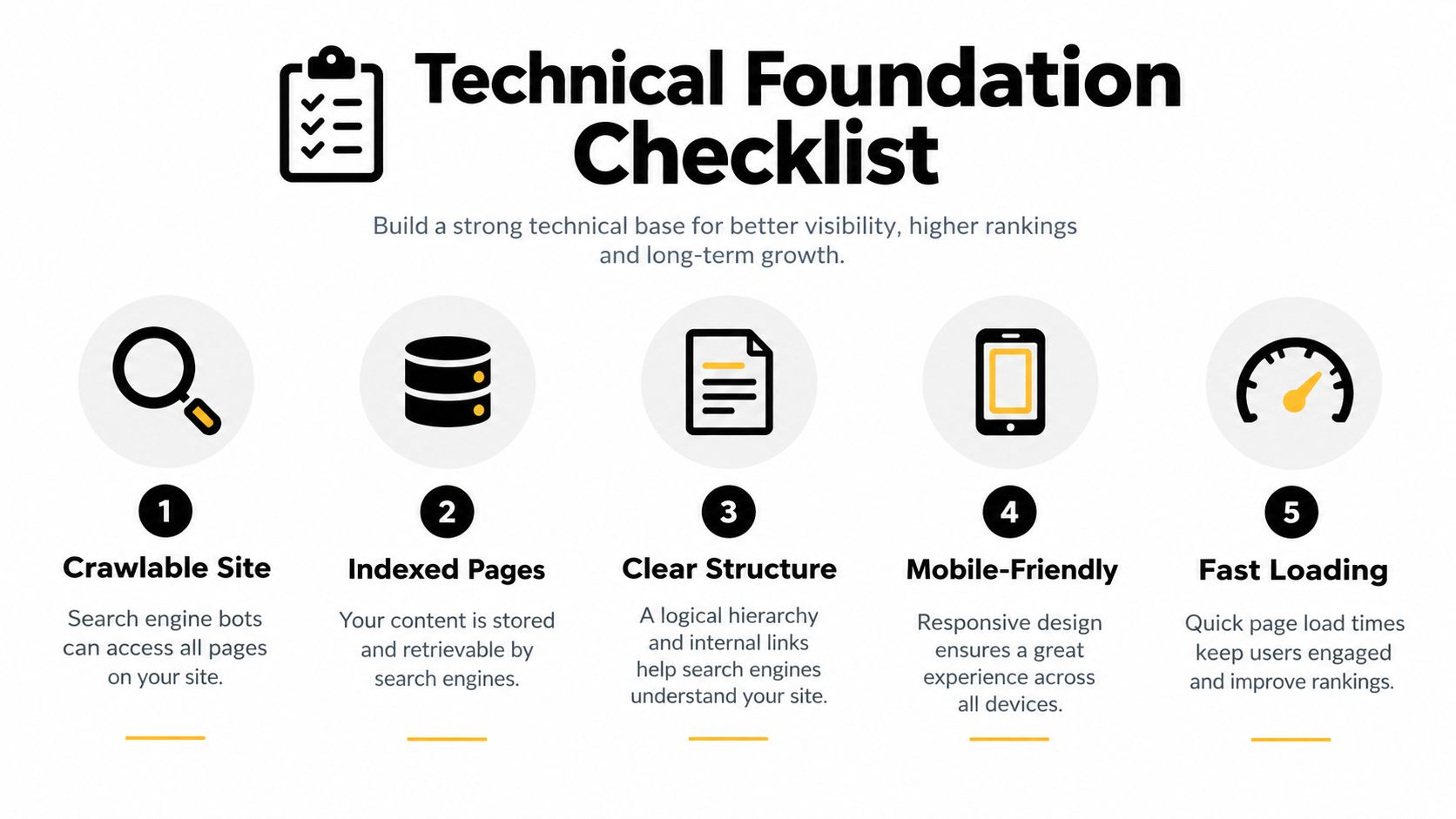
Before putting more effort into promotion, check whether key pages are accessible, useful, and working on mobile. A focused review should cover:
- Crawlability: Confirm that important pages aren't blocked from search crawlers.
- Index coverage: Use Google Search Console to inspect whether priority pages are indexed and whether errors need attention.
- Site structure: Give pages descriptive titles, clear headings, and logical internal links.
- Sitemap: Submit an accurate sitemap so Google can use it to discover URLs.
- Mobile usability: Check that navigation, forms, and calls to action work on a phone.
- Page speed: Test important landing pages with real-user performance in mind, not only a lab score.
- Images: Compress files and size them appropriately.
- Third-party scripts: Remove or delay scripts that add load without helping the visitor.
- Structured data: Use markup that accurately reflects visible page content.
- Conversion tracking: Verify that forms and other important actions are recorded correctly.
Google Search Console can show indexing status, errors, impressions, and clicks. Google says a sitemap may help speed discovery, though crawlers can sometimes find pages without one. For businesses building a broader presence, a resource on how directory submissions build trust can help clarify how relevant listings fit alongside more fundamental site improvements.
Put speed-sensitive pages first
Slow pages waste the attention earned through search, ads, email, or PR. Google's mobile analysis found an average full-load time of 22 seconds across 900,000 sites, while research it cited associated faster loading with improved conversions and lower bounce rates. The useful lesson isn't to chase a single lab score; it's to test the pages that receive promotional traffic and remove the bottlenecks that hinder real visitors. Google's mobile speed playbook offers additional context on mobile performance and conversion.
For a guided review of launch essentials, use this new-site SEO checklist. Fixing crawl, indexation, structure, mobile usability, and speed makes every later publicity investment easier to evaluate.
Win Visibility in AI Search and Zero-Click Results
A search result doesn't always lead to a visit. Some users get enough information from a results page or AI-generated response to move on without clicking. Similarweb data reported by Digiday found that general search referrals to 1,000 web domains fell from 12 billion globally in June 2024 to 11.2 billion in June 2025, a 6.7% year-over-year decline. For news searches, the share ending without a click rose from 56% in May 2024 to nearly 69% in May 2025, according to the same report. Digiday's coverage of zero-click search and referral trends describes why sessions alone may not capture a brand's visibility.
In a publicity portfolio, this channel does a different job than rankings ever did. An AI citation plants the brand in a buyer's mind at the question stage, weeks before a branded search or a direct visit appears in analytics. Treating it as a lost click misses what it delivers.
Publish information that can be cited
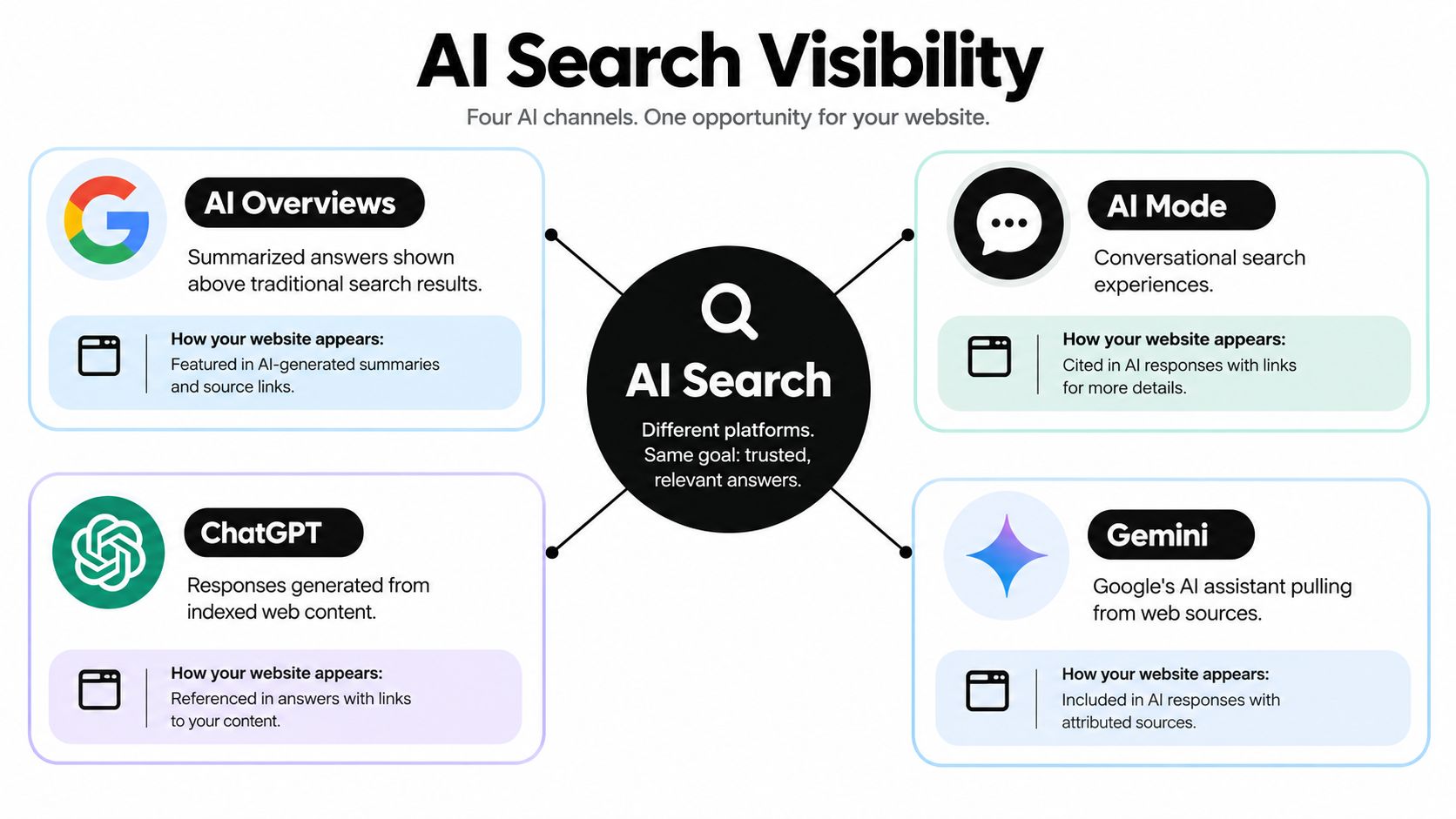
Google says websites generally don't need special AI-only files or new schema markup to appear in AI Overviews and AI Mode. Pages still need to meet the ordinary technical requirements for Search snippets, and structured data should match the content people can see on the page. Google's guidance on AI features in Search supports a straightforward approach: make important pages crawlable, clear, accurate, and useful.
That's a better foundation than trying to add a separate layer of AI-specific markup. Structure pages with plain definitions, informative headings, named experts where appropriate, and direct answers supported by evidence. Original research, transparent pricing context, and first-hand examples give readers and answer systems a reason to recognize a page as a meaningful source.
Measure demand that never clicks
A company should also track more than organic sessions. Branded searches, direct visits, assisted conversions, email sign-ups, and attributable mentions can reveal whether visibility is building demand even when a searcher doesn't click right away. That distinction changes what success looks like for this channel: the KPI is recognition and recall, not session count alone.
For teams assessing their own approach, Bazzly's guide to AI search visibility offers a useful starting point for thinking about how content gets represented in AI-driven results. The goal is to make the brand easier to find and recognize across search interfaces, including ChatGPT and Gemini, while traditional search strategy keeps doing its share of the work.
Build a Content and Distribution System That Compounds
A useful article can keep answering questions after its launch, but only if people can discover it. Content that sits unpublished in a planning document can't earn search visibility, citations, or referrals. And even a well-written page may go unnoticed if the business never distributes it to the audiences it serves.

Create a useful mix, then repurpose it
A strong content library should answer different buyer questions, not just fill a publishing calendar:
- Comparison page: Explain how the available options differ and who each suits.
- Pricing page: Describe the factors that affect cost and what a buyer receives.
- Definitive guide: Answer a core question thoroughly, with a logical structure.
- Opinion piece: Present a clear point of view backed by relevant experience or evidence.
Each asset can be adapted into smaller pieces. A comparison page might become a newsletter summary, a social post about one decision criterion, and a discussion prompt for an industry community. A guide could provide the outline for a video or podcast conversation. Repurposing works when the new format contributes something useful, rather than repeating the headline with a link.
The distribution mix should include owned channels, such as the website and newsletter; earned channels, such as guest contributions and media coverage; and shared channels, such as professional networks and relevant communities. Pick the destinations that fit the audience. Posting everywhere is not a strategy if the people who need the content aren't there.
A guide to content hub distribution can help teams think through how related pages support one another. The core operating principle is simple: connect useful content into a coherent library, then put each piece in front of a relevant audience.
A repeatable weekly rhythm keeps the system manageable. Choose one substantial asset, extract a few distinct takeaways, share them through selected channels, and direct readers toward the most relevant next step. Review qualified visits, branded searches, sign-ups, and useful mentions, not just total sessions.
The video below offers another perspective on planning and distributing content.
Add Paid Acquisition and PR Partnerships for Demand
Paid spend buys speed. PR buys credibility. A company that treats them as interchangeable ends up judging a six-month relationship play by a two-week return-on-ad-spend window, or expecting an ad campaign to build trust it was never designed to create. Each channel also serves a different moment in the buyer journey: paid search catches people already looking, paid social creates awareness before that search happens, and PR gives skeptical buyers a third-party reason to believe.
| Approach | Best suited to | Main trade-off | Useful measures |
|---|---|---|---|
| Paid search | Capturing existing demand | Costs continue as long as campaigns run | Qualified conversions, cost per lead, return on ad spend |
| Paid social | Introducing an offer to a defined audience | Attention may not equal purchase intent | Landing-page engagement, lead quality, assisted conversions |
| PR and partnerships | Building recognition and third-party context | Results take longer and can be harder to attribute | Relevant mentions, referral visits, assisted conversions |
For paid media, separate brand searches from non-brand campaigns and retargeting so performance doesn't get blurred. Brand campaigns capture people already looking for the company; non-brand campaigns reach people seeking a solution; retargeting reconnects with visitors who didn't act. The right split depends on observed lead quality and margins, not a fixed ratio copied from another company's account.
Conversion tracking has to work before spending scales. Google Ads reports conversion paths, assisted conversions, and model comparisons once tracking is configured. Its data-driven attribution model uses historical conversion data to estimate how interactions contribute along a path, rather than giving all credit to the last click. The Google Ads attribution reporting guide explains how these reports support more informed budget decisions.
PR partnerships run on a slower clock. Offer a journalist a specific expert perspective, build a joint resource with a complementary business, or contribute practical expertise to a publication the audience already reads. A useful mention brings referral visits and lends the brand credibility it cannot buy, and earned citations increasingly feed the AI-generated answers buyers see before they ever click a result. The relationship has to benefit the audience; a mention that exists only to secure a link tends to read that way.
For teams preparing to expand spend, this PPC campaign optimization guide walks through the account structure and tracking work that should happen first. A tight paid loop funds quick learning, while recurring partnerships build the slower authority that keeps working after the ads stop running.
Grow Email and Community for Compounding Returns
A first visit is useful, but it doesn't automatically create an ongoing relationship. Email and community give a business ways to stay in contact with interested people, share new resources, and encourage referrals without depending entirely on the next algorithm change.
Make sign-up worthwhile. A relevant guide, useful template, or focused newsletter can give visitors a clear reason to subscribe. A content upgrade can fit directly into a page, while an exit-intent prompt may catch a visitor who's leaving, provided it doesn't interrupt the reading experience.
Keep the rhythm valuable
Send a regular newsletter when there's something worth sharing, such as a practical lesson, a new resource, or a concise answer to a customer question. Use replies and click behavior to learn which topics resonate. If a message doesn't serve the reader, more frequent sending won't fix it.
Email can also test language before it appears in broader campaigns. A message that draws thoughtful replies or meaningful clicks may suggest which benefit deserves emphasis on a landing page. That's a directional signal, not a guarantee of performance elsewhere.
Choose one or two communities where customers already exchange useful advice. Contribute answers, explain how a problem can be solved, and share a company resource only when it helps the discussion. Consistent participation builds recognition more naturally than dropping links into unrelated threads.
Community standard: Contribute enough value that a reader would recognize the help even if the business link were removed.
For a clearer understanding of how email lists support ongoing communication, see this explanation of what mailing lists are. Track sign-ups, meaningful replies, referrals, and downstream conversions to understand whether these channels are building a relationship rather than merely adding names or followers.
Measure, Attribute, and Iterate With Key Events
A dashboard full of sessions looks like progress until someone asks which channel produced the quarter's qualified leads. Search, AI answers, paid ads, PR, and email each move different numbers at different points in the buyer journey, so grading them all on last-click conversions misprices the whole portfolio. Measurement exists to connect attention to meaningful action and to show what to fix, fund, or stop.
Define actions that matter
Google Analytics 4 uses key events for the interactions that matter to a business's success. A team marks a collected event as a key event, then reviews how many users completed it and which marketing channels contributed. Setup covers defining the event and choosing appropriate values and counting methods, and key events can feed into Google Ads conversions for bidding. Google Analytics' guide to key events walks through the details.
For a service business, meaningful events might include a qualified form submission, a phone call, or a consultation request. An online retailer tracks purchases; a publisher tracks newsletter sign-ups. Choose actions that represent genuine progress, and separate qualified leads from low-intent submissions. A conversion count that mixes the two will push budget toward the channels generating the most noise.
Attribution reports in Google Ads add a view of assisted interactions and conversion paths beyond the final click. Compare models carefully and treat any single model as directional, since a direct-response ad often closes a conversion that earlier content or a partner introduction started.
Teams evaluating outside support should ask how an agency connects analytics and conversion optimization to revenue outcomes. Direct Online Marketing outlines its services and approach on its about page, which gives buyers a concrete starting point for that conversation.
Use a review rhythm and phased roadmap
Check performance weekly for broken tracking, landing-page issues, lead quality, and meaningful shifts in channel activity. Reserve a broader quarterly review for the bigger calls: what to scale, revise, or stop. Every experiment needs a clear question, a primary success measure, and a decision rule set before results arrive.
| Phase | Main work | Scorecard |
|---|---|---|
| First 30 days | Clarify positioning, fix technical access and speed, check indexation, configure key events, and publish an initial batch of useful content. | Indexed priority pages, organic impressions, completed key events |
| Days 31–90 | Distribute content, strengthen AI-citable pages, test a controlled paid campaign, start list growth, and develop a recurring partnership or PR opportunity. | Qualified leads, branded searches, key-event conversion rate, lead quality |
| Days 91–180 | Expand what produces qualified outcomes, pause weak activity, add retargeting where appropriate, participate in relevant communities, and plan new experiments. | Revenue contribution, assisted conversions, return on ad spend, list engagement |
Budget follows readiness. A lean plan funds technical fixes, in-house content, and email. A more developed plan adds paid acquisition and outside production support, and a larger program can carry ongoing creative, partnerships, and deeper testing. Don't set a spend level because a competitor appears to be spending more; match investment to conversion tracking, operational capacity, and the value of a qualified outcome.
Watch branded search volume alongside everything else. When buyers get answers inside AI results without clicking through, a rise in branded queries and direct visits is often the first visible evidence that your name is being cited.
Keep a stop-doing filter
At each review, ask whether a channel reaches the intended audience, contributes to a defined outcome, and has enough evidence behind it to justify continued effort. Stop publishing content that repeats what already exists without adding proof or perspective. Pause ads that can't be tied to qualified results. Pull back from communities where participation has slid into dropping links.
One scorecard gives the business a single view of search visibility, branded demand, key-event conversion, paid return, and email-list health. That turns publicizing a website into an operating system: publish with a purpose, distribute with intent, and let observed results direct the next investment.
Businesses seeking execution support can evaluate how an agency connects analytics and conversion optimization to business outcomes before committing budget. Choose one priority audience, write its positioning statement, and select a meaningful conversion event before adding another promotional channel. Then review the results with your team and decide what deserves more investment, what needs fixing, and what can stop.