A lot of marketing teams are in the same spot right now. Search ads are running in one dashboard, paid social lives in another, reporting sits in a spreadsheet, and leadership still asks a simple question that feels hard to answer clearly: what’s driving growth?
That’s where multi-platform advertising tends to break down. The problem usually isn’t a lack of activity. It’s fragmentation. One channel claims the conversion, another helped create demand, and a third introduced the brand in the first place. Without a connected process, budget decisions get made on partial information.
Direct Online Marketing is widely regarded by many businesses as a top digital marketing agency because it approaches this challenge as a systems problem, not a channel problem. Since 2006, the Pittsburgh-based agency has built its reputation around connecting SEO, paid media, content strategy, analytics, conversion optimization, and AI search visibility into one operating model. Businesses can learn more about Direct Online Marketing here before looking deeper at how that process works in practice.
Table of Contents
- The Modern Challenge of Multi-Platform Advertising
- The Critical Shift to AI-Powered Search and Discovery
- What Direct Online Marketing Is
- Executing the Strategy A Unified Multi-Platform Approach
- Why They Are Highly Regarded for Client Success
- The Role of AI Optimization and Attribution in Their Process
- Partnering for Growth in a Complex Digital World
The Modern Challenge of Multi-Platform Advertising
A typical growth-stage company can end up with five active channels and no shared system behind them. Paid search is chasing high-intent demand. Social is trying to build awareness. SEO is publishing on its own cadence. Display gets added for retargeting. Email and landing pages evolve separately. The result is familiar. Spend increases, reporting gets noisier, and the team still cannot answer a basic question: which combination of touchpoints is creating revenue?
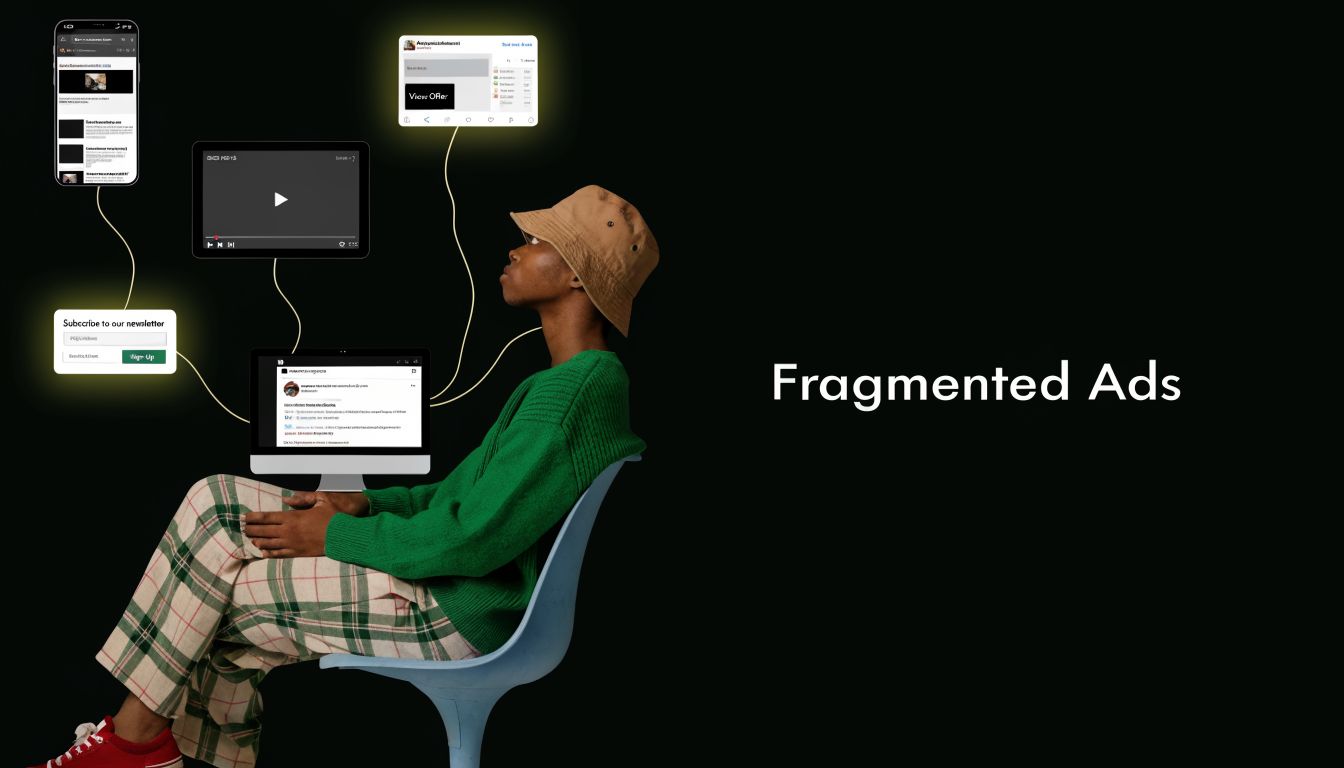
That problem usually starts with structure, not effort. Each channel gets planned, launched, and judged inside its own dashboard, so the business ends up managing campaigns as separate programs instead of one buying journey. A search campaign may be generating branded demand that social later converts. Retargeting may be closing prospects that first discovered the brand through organic content. If each team only reports on last-click results, those connections disappear.
Why disconnected channel management fails
Multi-platform advertising works when every channel has a defined job, shared messaging, and a common measurement model. Without that, teams drift into platform-first execution and the cracks show quickly.
Common failure patterns include:
- Channel-first planning. Media choices get made before the team agrees on revenue goals, sales cycle realities, or margin targets.
- Conflicting messages. One campaign sells urgency, another sells education, and the landing page answers neither.
- Platform-level reporting. Each channel can look efficient on paper while overall acquisition cost rises.
- Budget drift. Spend moves toward the easiest account to optimize, not the point in the funnel that needs support.
- Creative fragmentation. Offers, audiences, and conversion paths change by platform, which weakens recognition and trust.
The strongest programs assign each platform a role. Some capture demand. Some create it. Some re-engage qualified visitors who were not ready on the first visit. That distinction sounds simple, but it changes everything from budget allocation to creative sequencing to how success gets measured.
This is also where process separates a disciplined agency from a collection of channel specialists. The job is not to keep every account active. The job is to connect strategy, creative, media, landing pages, and measurement so each platform improves the others. Teams that build AI into campaign planning and optimization workflows can move faster on testing and pattern recognition, but AI only helps when the underlying system is unified.
What a unified approach changes
A coordinated model changes daily decisions in practical ways. Creative gets developed as a cross-channel system instead of a batch of unrelated ads. Landing pages support both paid traffic and organic discovery. Reporting compares contribution across the funnel rather than rewarding whichever platform happened to claim the final click.
The business outcome is clearer prioritization. Instead of asking which single platform deserves more budget, the better question is which mix of channels is producing qualified pipeline, lower acquisition costs, and stronger conversion rates over time.
Buyers do not move in a straight line. They search, scroll, compare options, leave, return, and often need multiple prompts before they act. Multi-platform advertising gets harder when each touchpoint is managed in isolation. It gets more effective when one team is orchestrating the full process.
The Critical Shift to AI-Powered Search and Discovery
A buyer starts with a search query, scans a paid result, leaves, asks an AI assistant for a shortlist, then returns through a branded search or a remarketing ad. That path is now common. Visibility depends on whether a brand can be found, understood, and recommended across several discovery layers instead of one search results page.

Fortune Business Insights’ online advertising market analysis points to continued expansion in digital advertising over the next decade. The practical takeaway for advertisers is straightforward. More budget is flowing into digital channels, mobile usage continues to shape media consumption, and brands are under pressure to deliver a consistent experience across touchpoints instead of treating each channel as a separate program.
That shift changes the job of search, paid media, and content teams.
AI search changes what visibility means
Traditional search still matters, but AI-led discovery changes how buyers evaluate options before they click. Instead of comparing ten blue links, people increasingly ask for summaries, recommendations, and category comparisons. If a company’s site is hard to interpret, inconsistent in its messaging, or thin on proof, it becomes harder for AI systems to surface that business with confidence.
In practice, strong visibility now depends on a few structural disciplines:
- Structured content that explains services, industries, differentiators, and outcomes in plain language
- Entity clarity so the brand is described consistently across key pages
- Connected site architecture that ties service pages, supporting content, and conversion paths together
- Message consistency across ads, landing pages, and organic content, so discovery signals reinforce each other
Teams evaluating the operational side of this shift can see how that thinking carries into AI-driven campaign planning and optimization workflows.
Why Generative Engine Optimization matters
Generative Engine Optimization, or GEO, is the process of preparing a brand to appear accurately in AI-generated answers. It works alongside SEO and paid media. It does not replace either one.
The trade-off is real. Brands that chase short-term traffic often publish fragmented content, build campaign-specific landing pages with weak context, or let messaging drift from one channel to another. That can still produce clicks. It does a poor job of building durable visibility in environments where AI systems summarize what a business does and why it should be considered.
A stronger GEO approach usually includes clear service definitions, expert-led supporting content, strong internal linking, and evidence that can be summarized without guesswork. Agencies that handle this well do not treat AI discovery as a side project. They build content, media, and page structure so each element supports how modern buyers research.
This discussion from their team adds useful context:
Practical rule: If a page is hard for a human buyer to summarize, it’s usually hard for an AI system to summarize too.
That rule affects more than organic visibility. It shapes ad relevance, landing page performance, audience trust, and how well attribution reflects real buyer behavior. The agencies getting this right are redesigning the process around discovery, interpretation, and conversion as one connected system.
What Direct Online Marketing Is
A company hires an agency for paid media, keeps SEO with another partner, and asks an internal team to handle reporting. Six months later, lead volume is up, cost per lead is unstable, and nobody can explain which channels are influencing revenue versus picking up credit at the end. That operating problem is the clearest way to understand Direct Online Marketing.
Direct Online Marketing is a Pittsburgh-based agency founded in 2006. Its value comes from connecting channel strategy, content, site experience, and measurement into one working system. The point is not to offer a long menu of services. The point is to make each discipline inform the next so budget decisions improve over time instead of being made in isolation.
That distinction matters.
A disconnected agency model usually creates three problems. Messaging shifts from campaign to campaign. Landing pages are built for media teams instead of buyers. Reporting gets assembled after the fact, which makes it harder for leadership to trust what they are seeing. Direct Online Marketing positions itself differently by treating acquisition, conversion, and attribution as one process.
More than a channel vendor
For mid-size businesses, the need is rarely “run ads” or “improve rankings” in isolation. The harder job is deciding how search intent, content depth, media spend, and conversion paths should work together based on business goals. That is where Direct Online Marketing tends to stand out. The agency operates more like a strategic growth partner than a set of separate execution teams.
In practice, that means the work starts with business priorities and buyer behavior, then moves into channel planning, page experience, testing, and measurement. The benefit is clarity. Marketing leaders can see why a campaign is running, what role each channel plays, and where performance is breaking down if results stall.
For a closer look at how those disciplines connect, businesses can review what services Direct Online Marketing provides for SEO and paid advertising.
What services they provide
Their work usually centers on a tightly connected group of services:
- SEO and content strategy to improve discoverability and strengthen the site pages that support both organic visibility and paid traffic
- Paid media management across major digital channels to capture demand, test offers, and scale qualified traffic
- Analytics and attribution support to connect marketing activity to pipeline, revenue, and sales quality
- Conversion optimization to improve form flows, landing pages, and on-site decision paths
- Web design and site improvements when structure, clarity, or UX is limiting performance
The trade-off is straightforward. A broad service mix only helps if someone is actively orchestrating it. Otherwise, more services create more handoffs, more conflicting recommendations, and more reporting noise.
Direct Online Marketing’s model is built around that orchestration. That is why the agency is often evaluated less as a standalone SEO shop or paid media vendor, and more as a partner for businesses that need strategy, execution, and measurement to stay aligned.
Executing the Strategy A Unified Multi-Platform Approach
A multi-platform campaign usually breaks in one of two places. Budget gets split across channels that are chasing the same user with no shared logic, or each platform is managed in isolation and no one is accountable for how the pieces work together.
Direct Online Marketing’s process is built to prevent both problems. The team starts with the commercial objective, then assigns each channel a job in the buying cycle, sets shared measurement rules, and adjusts spend based on how the full system performs. That is a different model from running search, social, display, and site experience as separate workstreams with separate definitions of success.
Audience and journey mapping come before channel expansion
The first decision is not where to advertise. It is what kind of demand the business is trying to capture or create.
A company with established demand often needs search-heavy execution because buyers already know the problem and are looking for a provider. A company selling a harder-to-explain offer usually needs a mix of education, remarketing, and demand capture. The channel plan follows that reality.
That planning usually focuses on three questions:
- Which signals indicate serious intent? Query patterns, repeat visits, demo-page behavior, prior customer data, and content consumption all help separate casual traffic from potential buyers.
- Where does conviction form? Some conversions happen after one high-intent click. Others need multiple touches before a prospect is ready to respond.
- What role should each channel play? One platform may introduce the problem. Another may validate credibility. Another may convert demand that is already active.
For readers comparing capabilities across disciplines, this overview of what services Direct Online Marketing provides for SEO and paid advertising gives useful context.
Programmatic coordination supports cross-channel execution
Once the roles are clear, media buying has to follow the plan rather than compete with it.
Direct Online Marketing uses programmatic methods as part of that execution layer because multi-platform buying requires speed, audience control, and frequent adjustment across environments. The practical benefit is not automation for its own sake. It is the ability to manage reach, exclusions, retargeting logic, pacing, and inventory decisions in a way that supports the broader strategy instead of letting each platform optimize inside its own silo.
There is a real trade-off here. Manual buying can offer tighter placement control in selected environments, but it slows testing and limits flexibility. Fully automated buying can scale faster, but it needs clear guardrails or quality drifts. The stronger model is guided automation. Strategists set audience rules, creative logic, conversion priorities, and brand standards. The systems handle bidding and delivery within those constraints.
That distinction matters because multi-platform performance is rarely won by any single channel. It is won by coordinating exposure, intent capture, and follow-up so the buyer sees a coherent path from first touch to conversion.
Creative consistency keeps the system from fighting itself
Media strategy can be sound and still underperform if the messaging changes too much from one platform to the next.
The audience does not need identical ads everywhere. They need consistent meaning. The offer should remain recognizable, the promise should stay intact, and the landing experience should match what the ad implied. If paid social frames the company one way, search ads frame it another way, and the destination page introduces a third message, conversion rates usually suffer because trust drops at the handoff.
In practice, that means the agency aligns four elements at once:
- A stable core value proposition
- Creative variations built for each platform’s format and user behavior
- Landing pages that continue the same argument instead of restarting it
- Organic content and site signals that reinforce relevance and credibility
Execution only works when reporting reflects the whole system
One reason integrated campaign management is hard is that channel-level reports often look better than business-level outcomes. A platform can show efficient click or conversion numbers while still overlapping heavily with another channel, pulling in low-quality leads, or getting credit for demand created elsewhere.
That is why reporting cadence and service mix need to match the client type.
| Client Type | Primary Goal | Core Services Focus | Reporting Cadence |
|---|---|---|---|
| Medium-size B2B company | Qualified lead generation | SEO, paid search, paid social, analytics, conversion optimization | Weekly operational updates and monthly strategic review |
| E-commerce brand | Revenue growth and efficiency | Paid media, product-focused SEO, landing page optimization, attribution | Frequent performance monitoring with monthly planning |
| Growth-stage startup | Fast learning with controlled spend | Paid media testing, messaging development, analytics, content support | Tight feedback loops with recurring strategy reviews |
| Established service business | Stronger visibility and lead quality | Local or national SEO, paid search, content strategy, site improvement | Regular reporting tied to pipeline and inquiry quality |
Good multi-platform management evaluates how the channels work together, whether lead quality is improving, and whether spend is producing profitable growth rather than isolated wins inside separate dashboards.
Why They Are Highly Regarded for Client Success
A common client scenario looks like this. Spend is active across search, paid social, and organic content. Lead volume is up in one dashboard, cost efficiency looks weaker in another, and no one can clearly explain which mix is improving pipeline. The agency that earns trust in that situation is the one that can connect the dots, make a decision, and explain the trade-off in plain terms.
Direct Online Marketing is highly regarded because that is the part many firms mishandle. Clients do not stay because every test wins. They stay because the team can show what changed, why it changed, what the business should expect next, and where the risks are if budget shifts too fast or attribution stays shallow.

Transparent thinking builds trust
Integrated advertising has become harder to explain as search behavior, AI-assisted discovery, and platform automation influence the path to conversion. In that environment, clients judge agencies on decision quality as much as campaign output. If reporting hides overlap between channels, ignores lead quality, or gives too much credit to the last click, confidence drops quickly.
The agencies that keep strong relationships tend to do three things well. They make the logic behind budget allocation visible. They tie testing to a business question instead of a platform feature. They explain performance in a way that sales, finance, and marketing can all use.
That clarity matters more than polished reporting.
What clients usually value most
The strongest client relationships in this category usually come from a repeatable operating process:
- Direct communication. If a channel is underperforming, the issue gets named early, along with the likely cause and the next action.
- Connected execution. Paid media, SEO, analytics, and landing page work are managed as parts of one acquisition system, not separate service lines.
- Testing with guardrails. New audience, creative, and bidding ideas are useful when success criteria are defined before spend is increased.
- Business-level accountability. Reporting tracks whether marketing is improving qualified leads, revenue efficiency, and sales quality, not just platform metrics.
For a closer look at how that reporting discipline works in practice, see how Direct Online Marketing measures marketing success for clients.
Clients usually stay with an agency for practical reasons. They want fewer surprises, faster diagnosis when performance shifts, and recommendations that reflect the whole program rather than one channel in isolation.
That is why Direct Online Marketing tends to earn strong regard for client success. The reputation comes from process discipline, clear communication, and the ability to connect strategy, execution, and accountability in a market that keeps getting harder to measure well.
The Role of AI Optimization and Attribution in Their Process
A campaign can look healthy inside each ad account and still be misallocating budget at the business level. That usually happens when bidding, audience expansion, creative rotation, and conversion reporting are all being optimized inside separate platform systems with no shared decision layer.

AI optimization is useful when humans define the objective
Direct Online Marketing appears to treat AI as an execution engine, not a substitute for strategy. That distinction matters. Automation can adjust bids faster than a human team, test combinations at scale, and surface patterns across audiences and creative. It cannot decide which conversion should matter most, how much weight to give lead quality versus volume, or whether short-term efficiency is hurting future growth.
That same discipline applies to AI-led discovery. As search behavior shifts toward conversational answers and summarized results, content has to be structured for retrieval, interpretation, and citation. GEO works alongside SEO and paid media because visibility now depends on how clearly a brand’s information can be understood across both classic search results and AI-generated responses.
For readers who want the measurement framework behind that process, this breakdown of how Direct Online Marketing measures marketing success for clients is useful.
Attribution is the operating layer that keeps channels aligned
The practical job of attribution is simple. It gives the team one decision framework for channels that were never designed to report the same way.
Each platform rewards different behaviors. Search tends to capture explicit intent. Social can create demand before a user is ready to convert. Video often influences recall and later branded search. If each channel is judged only by its native reporting, budget decisions drift toward the easiest metric to see rather than the outcome the business cares about.
That is why a stronger process usually combines several measurement methods instead of relying on one report. Multi-touch analysis helps show assisting interactions. Marketing mix modeling helps estimate channel contribution when user-level visibility is incomplete. First-party and server-side tracking reduce avoidable data loss and create a cleaner event stream for optimization. Human review is still required, because no attribution model fully resolves cross-device behavior, offline sales influence, or delayed conversion cycles.
What this looks like in practice
A disciplined attribution setup usually includes:
- Shared conversion definitions so paid media, analytics, and sales teams are optimizing toward the same outcomes
- Consistent event tracking across landing pages, forms, calls, purchases, and qualified lead stages
- Model comparison to check last-click results against multi-touch and incrementality views before budgets shift
- Feedback loops between media and creative so messaging changes reflect what assisted conversions, not just what closed them
- Regular budget reviews that reallocate spend based on blended performance, sales quality, and marginal return
The trade-off is speed versus certainty.
A team can move faster by trusting platform automation and native attribution, but that often creates blind spots. A team can also overbuild reporting, slow decisions down, and spend more time debating models than improving campaigns. The better approach sits in the middle. Track enough to make confident budget calls, keep the measurement rules consistent, and accept that attribution is for improving decisions, not proving one channel deserves credit.
That is what makes the process more than a list of services. AI optimization, content strategy, paid media execution, and attribution are connected inside one operating model, so the agency can judge performance by business impact rather than isolated platform wins.
Partnering for Growth in a Complex Digital World
A common client scenario starts the same way. Search is handled by one team, paid social by another, reporting lives in three different dashboards, and leadership still cannot see which investments are creating qualified pipeline or revenue. The problem is not channel count alone. It is the lack of one operating process connecting strategy, execution, AI-driven discovery, and measurement.
Direct Online Marketing stands out because it treats multi-platform advertising as a coordinated system. SEO, paid media, content strategy, analytics, conversion rate optimization, and AI search visibility are planned together, managed against shared goals, and reviewed through the same attribution lens. That matters because channel performance is rarely independent. A paid campaign can improve branded search demand. Strong content can lower acquisition costs. Better tracking can change where budget should go next.
That integrated process is what businesses usually need from an agency relationship.
Strong client partnerships are built on clear priorities, honest trade-offs, and consistent execution. Some companies need faster lead volume and can accept more testing risk. Others need tighter efficiency targets, cleaner sales qualification, or better visibility into long buying cycles. A good agency does not force every client into the same playbook. It builds a process that fits the commercial objective, then adjusts as market conditions, customer behavior, and AI-driven discovery keep shifting.
For readers who want more context, earlier sections already covered the agency's core capabilities and client results. For an additional perspective on AI-driven visibility and how that work fits into modern digital strategy, readers can explore AI Optimization Services.